
 White Paper
Airflow Equipment for Animal Research Facilities: Expert Selection Guide


The performance of an animal research facility depends on more than just the animals inside it — it depends on the air around them. From temperature and humidity to pathogen containment and allergen control, airflow is the invisible architecture that determines whether a vivarium meets welfare standards, passes regulatory inspection, and delivers reproducible science.
In this expert guide, authored by biocontainment engineer Dan Yoong — a specialist with over 20 years of experience designing BSL-2, BSL-3, and BSL-4 laboratories — we break down every category of airflow equipment used in modern animal research facilities, explain the design principles that govern selection, and link you directly to NuAire's purpose-built solutions.
Animal research facilities require five core types of airflow equipment: (1) Individually Ventilated Cages (IVCs) with HEPA-filtered supply and exhaust, (2) Class II Type A2 Biosafety Cabinets for biohazardous animal handling, (3) Cage Change / Animal Transfer Stations for allergen control, (4) Animal Refuse Workstations for cage dumping and waste management, and (5) HVAC systems that maintain species-specific temperature, humidity, and pressure cascades. Each serves a distinct containment, welfare, and compliance purpose.
Core Design Principles for Animal Research Facility Airflow
Effective vivarium airflow is not a single-product decision. It emerges from a layered set of principles that span facility-wide HVAC engineering, individual equipment selection, and species-specific environmental requirements.
Principle 1: Animal Welfare as the Non-Negotiable Foundation
Every airflow decision in a vivarium — from the placement of supply diffusers to the air change rate within an IVC rack — must prioritize animal health. Poor ventilation causes heat stress, respiratory distress, and ammonia buildup from waste accumulation. HVAC systems must deliver steady fresh air, minimize drafts, and maintain stable species-appropriate conditions. Different animal models have distinct thermal comfort zones; a system calibrated for mice will not automatically serve rats, rabbits, or primates.
Principle 2: The Controlled Environment Imperative
SPF (Specific Pathogen-Free) and biocontainment facilities have fundamentally different pressure requirements. SPF rooms are typically maintained at positive pressure to prevent environmental contamination from reaching the animals. Biocontainment areas — especially BSL-2 and BSL-3 environments — use cascading negative pressure to prevent accidental release of biological agents. Neither approach is universal; effective facility design requires pressure regimes to be explicitly planned and enforced from day one.
Principle 3: Allergen and Odor Control for Staff Health and Compliance
Laboratory Animal Allergy (LAA) is an occupational health concern affecting up to 30% of animal facility workers. Airborne allergens generated during cage changes, animal handling, and bedding disposal are the primary exposure vectors. Beyond allergens, volatile organic compounds (VOCs), ammonia, and particulates from animal waste create odor problems that impair worker productivity, trigger community complaints, and invite regulatory scrutiny. Both challenges are best addressed at the source through appropriately specified equipment — not simply through room-level exhaust.
Types of Airflow Equipment for Animal Research Facilities
1. Individually Ventilated Cages (IVCs)
Individually Ventilated Cages are the gold standard for housing small laboratory animals such as mice and rats in SPF and biocontainment settings. Each cage receives its own HEPA-filtered air supply and exhaust, maintaining a controlled microenvironment independent of neighboring cages. Air change rates commonly exceed 70 changes per hour within the cage, a rate that far outpaces conventional open-top housing.
IVCs can be configured for positive or negative pressure depending on application — positive for SPF barrier areas where protecting the animal colony from environmental contamination is paramount, negative for infectious disease models or immunocompromised studies where containment of the agent is the priority. Some rack systems offer switchable modes, but any system offering this capability must be fully airtight and equipped with a simplified, clear Human Machine Interface (HMI) to prevent accidental mode errors — especially critical in biocontainment settings.
Key IVC Selection Criteria:
- Air inlet direction: Verify design prevents cold-air chill directly onto animals
- Autoclave durability: Confirm cycle rating for long-term cost of ownership
- Disposable vs. reusable cages: Match cage type to facility purpose, colony size, and contamination risk tolerance
- HMI clarity: For switchable pressure systems, prioritize systems with clear, fail-safe interfaces
- Compatibility with facility HVAC: No IVC can compensate for an inadequately designed room-level system
2. Class II Type A2 Biosafety Cabinets for Animal Handling
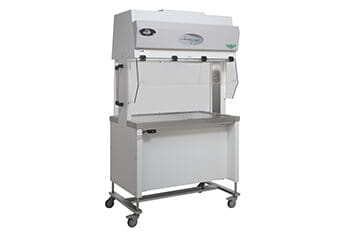
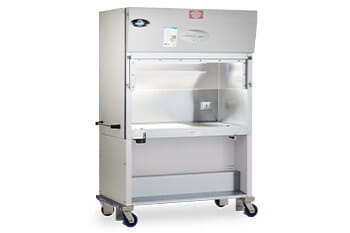
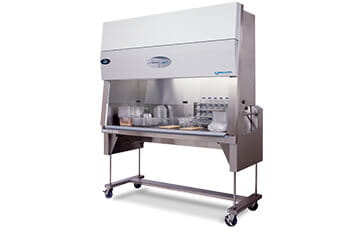
Class II Biosafety Cabinets are mandatory when working with biohazardous agents or when sterile conditions are required. For animal facilities, the Class II Type A2 configuration — such as NuAire's LabGard LP NU-640 and LabGard ES NU-677 — is the preferred choice. Type A2 cabinets recirculate approximately 70% of HEPA-filtered cabinet air while exhausting 30% through a dedicated exhaust HEPA filter. This creates tri-directional protection: personnel, product (animal or sample), and environment.
While HEPA filtration is highly effective against biological particulates, it is not designed to capture chemical fumes or odors. If procedures involve chemical hazards — for example, anesthetic agents — a canopy exhaust connection to the facility's building exhaust system is required. Importantly, not all manufacturer-supplied canopy transitions comply with NSF/ANSI 49 standards, which require inward directional airflow at the connection point and an alarm when this airflow is absent. Specify compliant canopy transitions and flexible duct connections to dampen vibration.
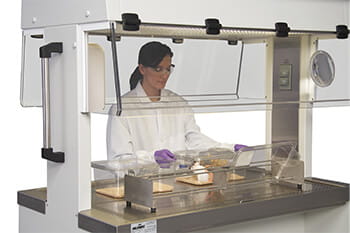
Sash height is also a practical consideration. Standard NSF/ANSI 49 BSCs come with 8- or 10-inch sash openings. For animal handling — particularly when working with cages and racks — a 10- or 12-inch sash height offers substantially improved ergonomic access while remaining NSF/ANSI 49-compliant.
NuAire Animal Handling BSC Products:
- NU-640 LabGard — Console Class II Type A2 Animal Handling BSC → View Product
- NU-677 LabGard — Class II Type A2 Animal Handling BSC → View Product
- NU-610 LabGard — Dual Access Class II Type A2 Animal Handling BSC → View Product
For detailed guidance specific to biosafety cabinets, read our resource: 10 Tips for Animal Handling BSC Safety.
3. Cage Change Stations and Animal Transfer Stations
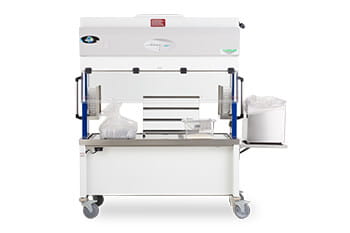
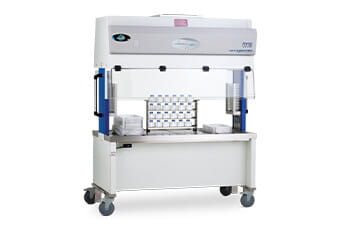
In larger facilities, cage-changing activities can occupy husbandry staff for four to six hours per day. This volume of work demands purpose-built equipment — not a biosafety cabinet repurposed for high-frequency cage transfer. Dedicated Animal Transfer Stations are engineered for this workflow: HEPA-filtered downflow air captures allergens and particulates at the source, preventing escape into the room environment.
The key performance indicator for any cage change station is its ability to contain the fine dust and aerosolized bedding particles generated when emptying soiled cages. A reputable manufacturer should be able to provide documented airflow validation data demonstrating containment efficacy under real-world cage-emptying conditions. Downflow and inflow airflows must be carefully balanced — insufficient inflow allows particle escape; excessive inflow can create turbulence that disrupts HEPA efficiency.
Practical factors matter too: high-quality casters for facility maneuverability, adjustable work surface heights for ergonomic comfort across staff, and the ability to accommodate specific cage brands through deep-well work surface customization.
NuAire AllerGard Animal Transfer Stations:
- NU-622 AllerGard — Dual-Sided Open Access Transfer Station → View Product
- NU-623 AllerGard — Single-Sided Animal Transfer Station → View Product
- NU-620M — Innovive Edition for INNOCAGE Mouse → View Product
- NU-620R — Innovive Edition for INNOCAGE Rat → View Product
For additional best practices, review our resource: 10 Tips for Working Safely in an Animal Transfer Station.
4. Animal Refuse Workstations
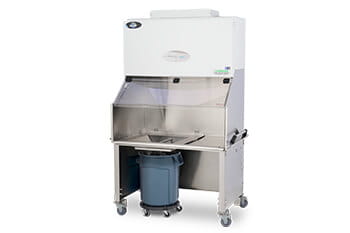
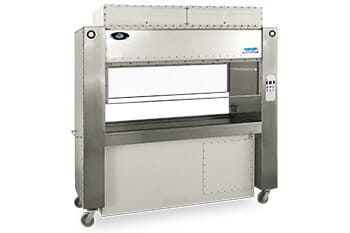
When cage dumping and waste disposal volume is high — particularly in large rodent colonies — a dedicated Animal Refuse Workstation is the appropriate solution. Designed on the same principles as a Class I Biosafety Cabinet, these units provide consistent inward airflow through HEPA filtration to capture dust, allergens, and odorous particulates generated during bedding disposal.
For facilities where exhaust air is recirculated, activated carbon filters for odor control should be incorporated. Ergonomic features — adjustable working height and automated waste load detection — are options that reduce physical strain and improve operational efficiency. Like all vivarium equipment, the refuse workstation should be evaluated based on level of containment needed, frequency of use, and the specific waste volumes handled.
NuAire Animal Refuse Products:
- NU-608 AllerGard — Class I Animal Refuse Workstation → View Product
Choosing the Right Equipment: A Quick Comparison
| Equipment | Biohazard Containment | Allergen Control | Best For |
|---|---|---|---|
| Class II Type A2 BSC | Yes (Full) | Yes | Biohazardous work, sterile procedures, infectious agents |
| Animal Transfer Station | No | Yes | High-frequency cage changes, allergen control, routine transfers |
| Animal Refuse Workstation | Partial (Class I) | Yes | High-volume cage dumping, odor and dust management |
| IVC Rack System | Yes (containment mode) | Yes | Long-term housing, SPF colonies, biocontainment models |
For a deeper comparison, read our resource: Animal Transfer Station vs. Biosafety Cabinet .
5. Equipment Customization and Modification
Standard configurations address the majority of vivarium needs, but specialized facilities — gnotobiotic colonies, dual-use SPF/biocontainment rooms, or high-throughput rodent pharmacology suites — often require custom modifications. Common requests include resizing units for tight corridor maneuverability, adding cage-brand-specific work surface wells, integrating waste chutes or feed hoppers, and modifying exhaust connections for unique building systems.
Any modification must be performed only with explicit manufacturer authorization and must be followed by rigorous validation. This includes airflow performance testing, fail-safe evaluation, and updated documentation (SOPs, risk assessments, certification records). Modifications can introduce unforeseen operational risks; close manufacturer collaboration during post-installation commissioning is essential.
6. Gnotobiotic Facility Airflow: The Highest Standard
Gnotobiotic research facilities represent the extreme end of vivarium design: animals must be entirely free of bacteria, fungi, viruses, and parasites. This demands air handling systems operating at dramatically higher HEPA-filtered air change rates than standard vivariums, combined with sterile transfer ports, flexible or rigid isolators, and biosafety cabinets modified for aseptic animal manipulation.
Every entry point — air, food, bedding, personnel — must be validated as a contamination-free pathway. Equipment in gnotobiotic facilities typically requires significant customization; selecting a manufacturer with deep expertise in isolator design and sterile transfer technology is the first and most critical step.
Build the Vivarium Your Research Deserves
Effective animal research begins with the air your animals breathe and the environment your staff works in. Choosing the right airflow equipment — from IVCs that maintain cage-level microenvironments to biosafety cabinets that contain biological hazards, to transfer stations that protect your team from daily allergen exposure — is a decision with long-term consequences for safety, compliance, and research quality.
NuAire's AllerGard and LabGard product families are designed specifically for the demands of vivarium environments. Every product is built to recognized international standards, tested for real-world containment performance, and backed by expert support. Whether you're planning a new facility, upgrading aging equipment, or working through a complex biocontainment challenge, NuAire's team is ready to help.

Frequently Asked Questions About Animal Research Lab Airflow
What is the difference between an animal transfer station and a biosafety cabinet?
An animal transfer station provides HEPA-filtered downflow and inflow airflow to protect laboratory staff from allergens and particulates during routine cage handling. It does NOT provide biological containment. A Class II Biosafety Cabinet — particularly the Type A2 — provides full biocontainment protection for personnel, the animal or sample, and the environment. Use a BSC when working with infectious agents or when sterile conditions are required; use a transfer station for routine, non-biohazardous cage changes.
How many air changes per hour do IVCs provide?
Individually Ventilated Cages (IVCs) typically provide over 70 HEPA-filtered air changes per hour within each cage. This is significantly higher than conventional open-top housing and is essential for maintaining optimal air quality, removing ammonia, and preventing cross-contamination between cages. The exact rate varies by manufacturer and rack model.
What pressure regime should a biocontainment vivarium use?
Biocontainment vivariums should use a cascading negative pressure regime. This means the containment areas are maintained at lower air pressure than adjacent corridors and support spaces, so that any uncontrolled airflow moves inward (toward containment) rather than outward. This prevents the accidental release of biological agents into unprotected areas. SPF (Specific Pathogen-Free) facilities use the opposite approach — positive pressure — to keep environmental contaminants away from clean animal colonies.
Does a Class II Type A2 BSC protect against chemical fumes?
No. HEPA filtration in Type A2 BSCs captures biological particulates and allergens effectively, but does NOT remove chemical vapors or gaseous odors. If procedures involve volatile chemicals (e.g., anesthetic agents), a canopy exhaust connection that ducts cabinet air directly to the building exhaust system is required. Ensure the canopy transition complies with NSF/ANSI 49, which requires maintained inward airflow at the connection point and an alarm if this condition fails.
Selecting the right cabinet requires a thorough evaluation of risk. Learn more in our white paper: Biosafety Cabinet Selection in the Context of Risk Assessment.
What equipment is needed for a gnotobiotic animal facility?
Gnotobiotic facilities require specialized sterile isolators (flexible film or rigid), HEPA-filtered air systems operating at very high air change rates, sterile transfer ports or docking systems for transport containers, and modified biosafety cabinets for experimental procedures. All equipment must maintain complete microorganism exclusion, and virtually all components require customization to meet specific research protocol requirements.
What is Laboratory Animal Allergy (LAA) and how do airflow systems help?
Laboratory Animal Allergy (LAA) is an occupational health condition caused by exposure to animal-derived airborne allergens — primarily from urine proteins, fur, and dander. It affects up to 30% of animal facility workers. Airflow equipment helps by capturing allergens at their source: IVCs contain allergens within each cage, animal transfer stations capture airborne particles during cage changes via HEPA-filtered downflow, and animal refuse workstations contain dust during bedding disposal. Proper HVAC design at the room level prevents allergen recirculation between rooms.
Can IVCs be switched between positive and negative pressure?
Some IVC rack systems are designed to operate in both positive and negative pressure modes using the same hardware. However, this flexibility introduces risk if the system is not completely airtight or if the control interface is unclear. In containment settings, accidentally operating a containment cage in positive pressure mode could result in release of a biological agent. Any switchable-mode IVC system should be evaluated for airtightness and must be paired with a simplified, clear Human Machine Interface (HMI) with appropriate safety alarms.
What factors should I consider when selecting airflow equipment for a vivarium?
Key factors include: (1) Type of hazard — biohazard, allergen, or both; (2) Level of containment required — SPF, BSL-2, or BSL-3; (3) Species housed and their specific temperature and airflow needs; (4) Workflow volume — high-frequency cage changes require dedicated transfer stations, not BSCs; (5) Compliance requirements — NSF/ANSI 49 for BSCs, AAALAC, and GLP standards; (6) Ergonomics and maneuverability for staff efficiency; (7) Customization capability for facility-specific modifications; (8) Manufacturer expertise and post-installation support.
Related Resources

HEPA versus ULPA Filters in Biosafety Cabinets
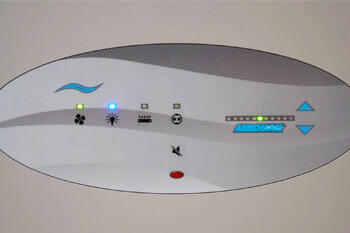

Aeromax Biosafety Cabinet Control System Introduction
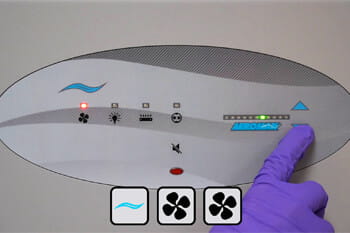
Setting the Blower Password on the Aeromax Control System
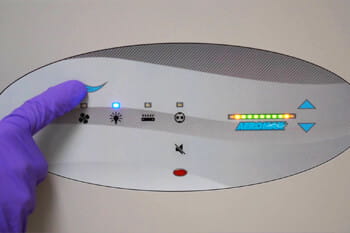
Setting the Light Timer on the Aeromax Control System


Animal Handling Class II, Type A2 Biosafety Cabinet NU-677E (230V) Specification


LabGard NU-677 Animal Handling Biosafety Cabinet Brochure

Animal Handling Class II, Type A2 Biosafety Cabinet NU-677 (115V) Specification
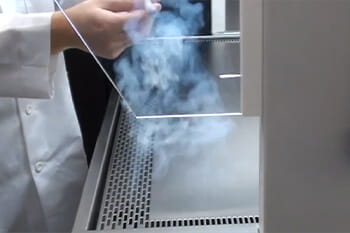
AllerGard NU-620 Animal Transfer Station Smoke Flow Demonstration


Flexibility & Mobility for Animal Research Facilities

Animal Transfer Station NU-620 (115V) Specification

Animal Transfer Station Preventative Maintenance Calendar