NuAire’s PharmaGard™ family of Restricted Access Barrier Systems (RABS) includes both Compounding Aseptic Isolator (CAI) and Compounding Aseptic Containment Isolator (CACI) designs to meet your pharmacy’s need to comply with USP <797> and USP <800> requirements for a Primary Engineering Control (PEC) or Containment Primary Engineering Control (C-PEC) for drug preparations. As the name implies, all PharmaGard™ RABS provide a physical barrier for compounding that consists of a steel enclosure with polycarbonate front window that is divided into a transfer chamber and work chamber that maintain a differential pressure both relative to each other and to the surrounding environment. One or multiple EC impellers provide 20 air changes per minute of HEPA filtered air to the ISO Class 5 interior. Items can be introduced to the transfer chamber and later passed on a sliding tray through a door to the work chamber where the operator can perform compounding through a set of attached gloves. Able to adapt to each pharmacy’s workflow, one can configure the unit with the transfer chamber on the left or right side and options such as an IV bar with 6 hooks inside or a waste disposal system underneath.
3 results
-
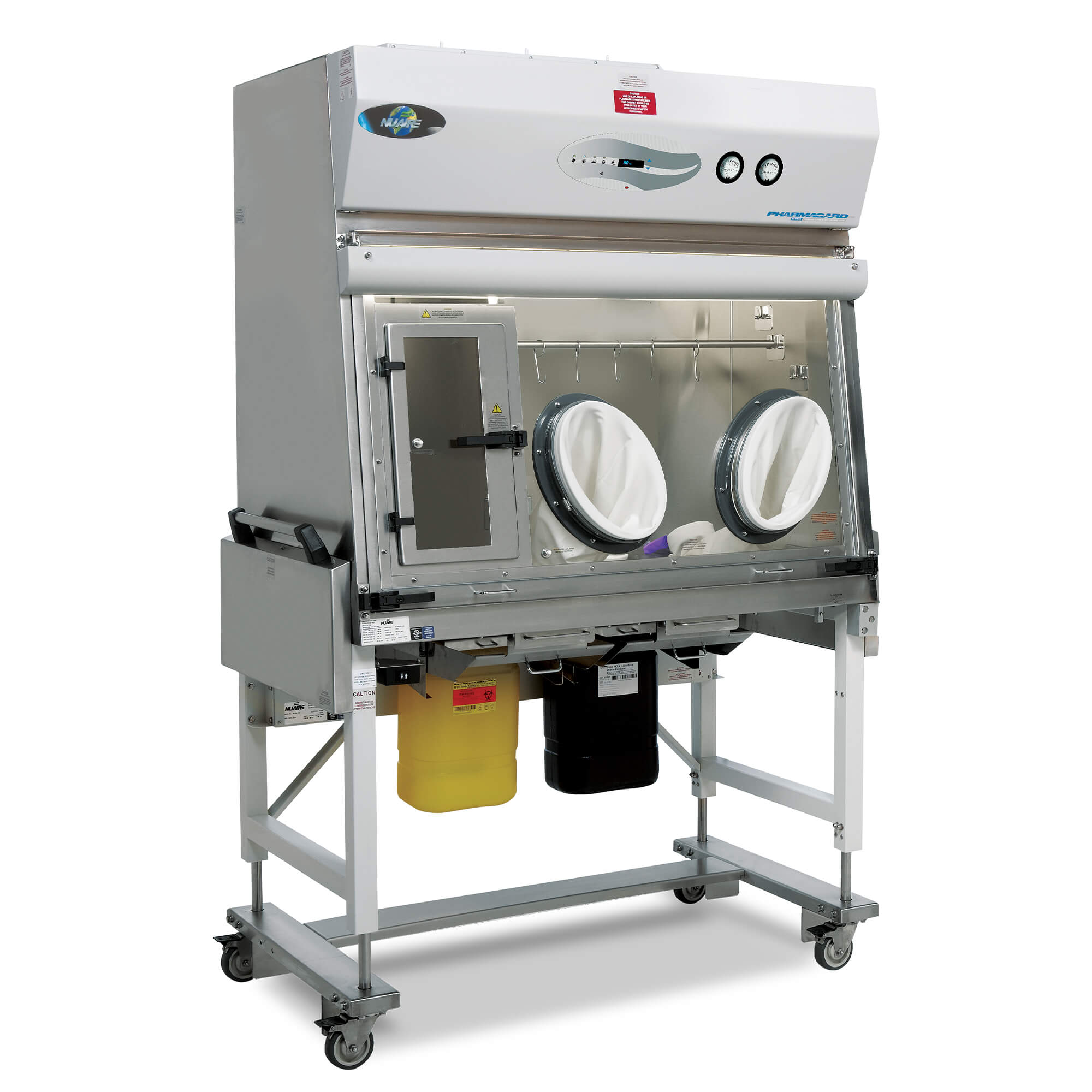
NU-NR800
PharmaGard NU-NR800 Recirculating Compounding Aseptic Containment Isolator (CACI)
Safe, Efficient Air Recirculation for Hazardous Drug Compounding.
-
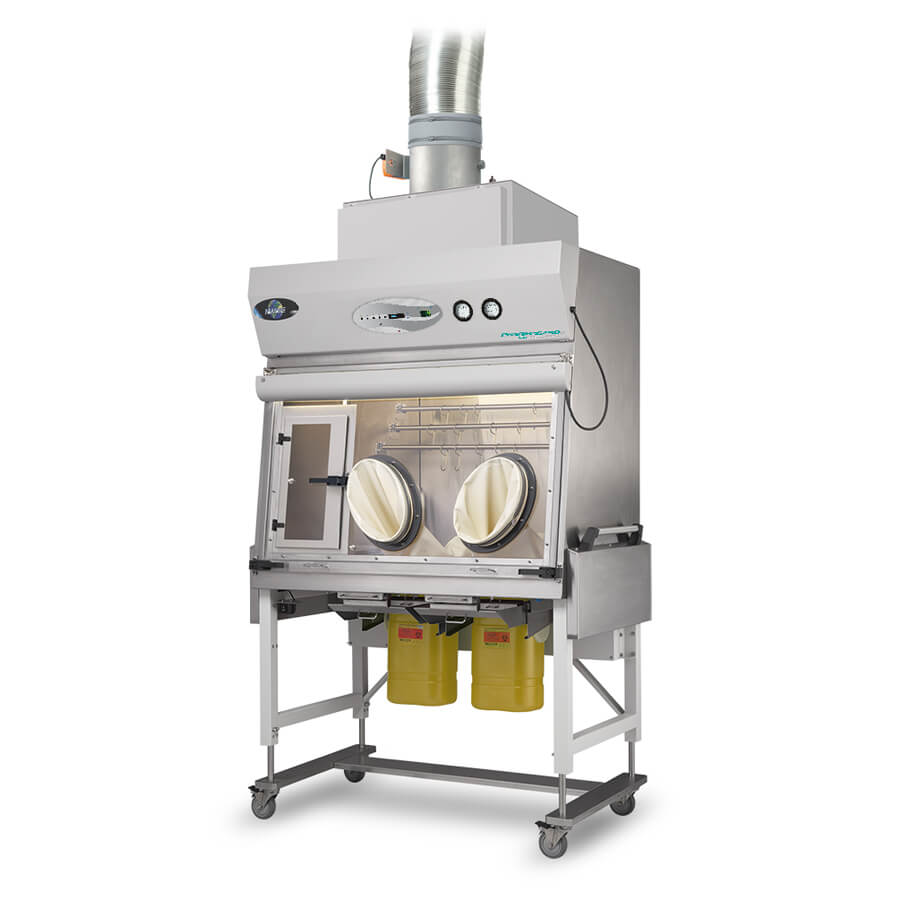
NU-NTE800
PharmaGard NU-NTE800 Total Exhaust Compounding Aseptic Containment Isolator
Safe drug compounding with superior containment for USP 800 compliance.
-
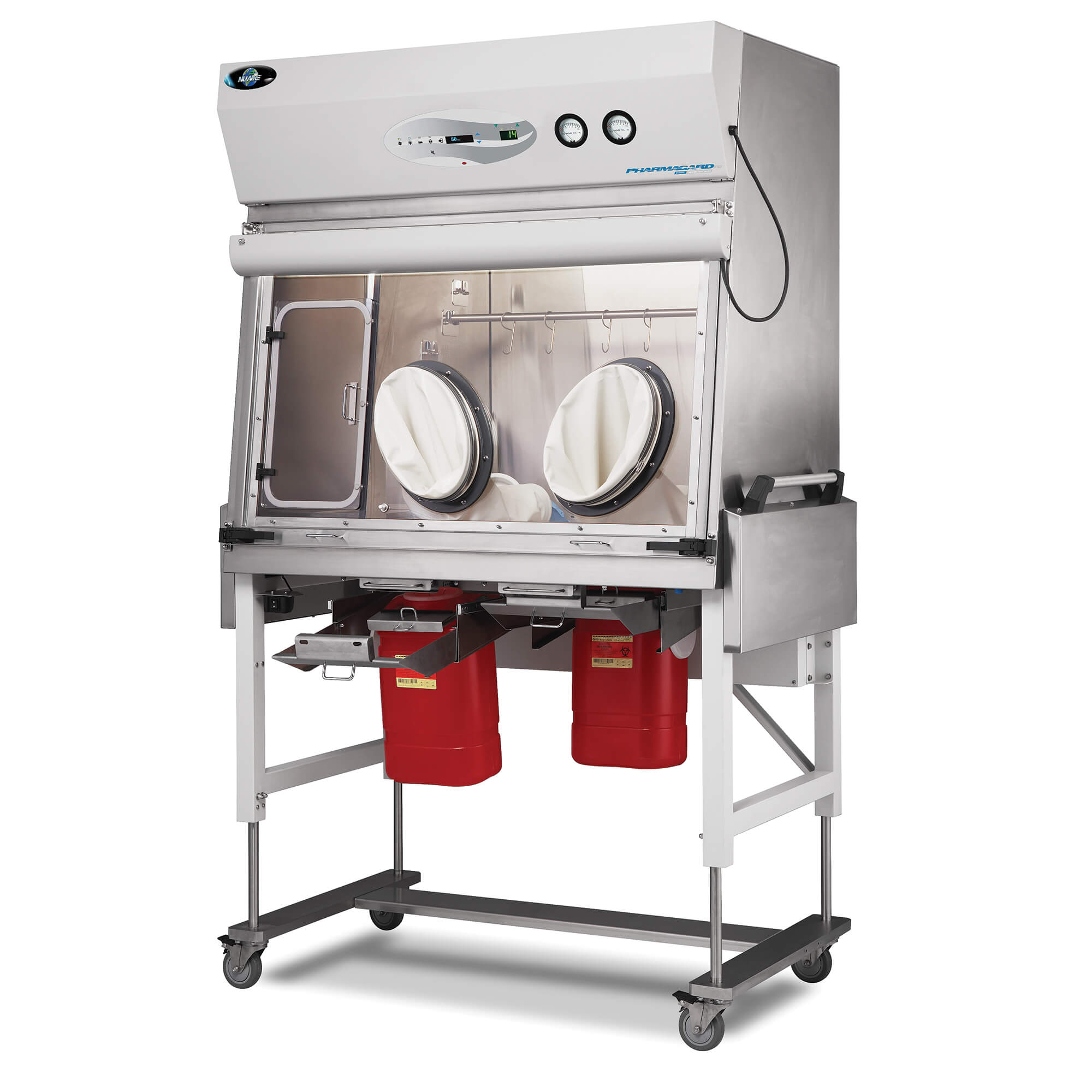
NU-PR797
PharmaGard ES NU-PR797 Compounding Aseptic Isolator
Ultimate protection & workflow efficiency for sterile non-hazardous compounding.


PharmaGard NU-NR800E Purchase Specifications (230V)
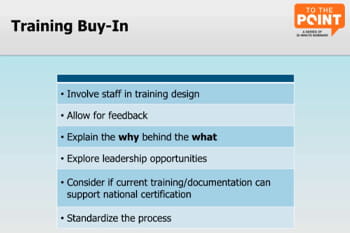

Leverage USP Training to Drive Technician Retention
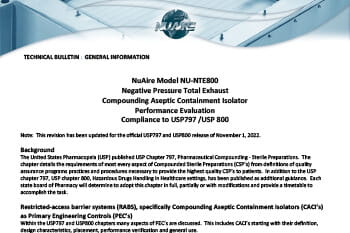
NU-NTE800 Performance Evaluation for USP797 and USP800

Airflow in a Negative Pressure Compounding Aseptic Containment Isolator
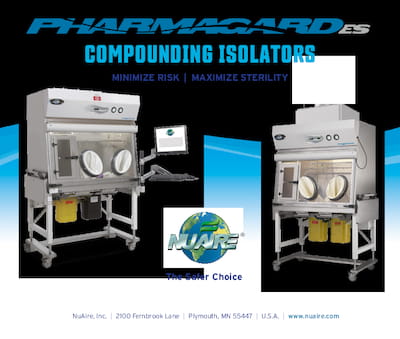

PharmaGard Restricted Access Barrier Systems
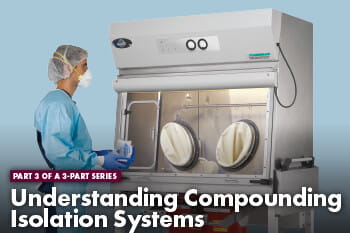
Understanding Compounding Isolators
PharmaGard NU-NR800E Operations & Maintenance Manual (230V)
Restricted Access Barrier Systems FAQs
What is a Restricted Access Barrier System?
A Restricted Access Barrier System, or RABS, is an enclosure that provides HEPA-filtered ISO Class 5 unidirectional airflow for sterile compounding. Materials enter and exit through defined transfer openings, while glove ports provide physical separation between personnel and the compounding work area. Review NuAire's RABS product family overview for model options and workflow configurations.
What is the difference between a CAI and a CACI?
A Compounding Aseptic Isolator (CAI) is used for sterile, non-hazardous compounded sterile preparations. A Compounding Aseptic Containment Isolator (CACI) is used for sterile hazardous drug compounding and is designed to support both aseptic conditions and containment of hazardous drug exposure. The Understanding Compounding Isolators white paper provides additional background for pharmacy teams evaluating CAI and CACI workflows.
Which NuAire PharmaGard model should I choose for non-hazardous sterile compounding?
For sterile non-hazardous compounding, the PharmaGard NU-PR797 is the appropriate CAI model. It uses positive pressure recirculating airflow to support ISO Class 5 conditions for compounded sterile preparations under USP <797> workflows.
Which NuAire PharmaGard models are used for hazardous drug compounding?
For sterile hazardous drug compounding, NuAire offers the PharmaGard NU-NR800 and PharmaGard NU-NTE800 CACI models. The NU-NR800 is a negative pressure recirculating CACI, while the NU-NTE800 is a negative pressure total exhaust CACI for applications requiring full exhaust connection.
What is the difference between the NU-NR800 and NU-NTE800?
The NU-NR800 is a negative pressure recirculating CACI that partially recirculates HEPA-filtered air and can be connected to facility exhaust through a canopy or air gap transition. The NU-NTE800 is a negative pressure total exhaust CACI that exhausts air through the exhaust HEPA filter housing and must be connected to the facility exhaust system. Use the PharmaGard RABS brochure to compare applications and airflow approaches.
Do PharmaGard RABS provide ISO Class 5 conditions?
Yes. PharmaGard CAI and CACI systems are engineered to provide HEPA-filtered unidirectional airflow within the work zone and interchange area to support ISO Class 5 conditions during sterile compounding workflows when installed, operated, and certified according to applicable requirements. See the PharmaGard RABS brochure for product-family performance details.
How do PharmaGard isolators help maintain first air?
PharmaGard isolators use HEPA-filtered unidirectional airflow across the work zone and interchange area. Properly arranged materials allow first air to bathe critical sites during compounding, helping reduce the risk of contamination and supporting aseptic technique. The Understanding Compounding Isolators white paper is the recommended resource for this educational explanation.
What USP chapters apply to RABS used in pharmacy compounding?
USP <797> applies to sterile compounding and defines requirements for compounded sterile preparations, including use of ISO Class 5 primary engineering controls. USP <800> applies when hazardous drugs are handled and adds requirements for containment, personnel protection, facility design, and engineering controls.
Where should a RABS be installed for sterile compounding?
Placement depends on the CSP category and whether hazardous drugs are compounded. Category 1 CSPs may be prepared in an unclassified segregated compounding area when permitted by USP <797>. Category 2 and Category 3 CSPs generally require a cleanroom suite with appropriate classified spaces. Hazardous drug compounding must also follow USP <800> facility and engineering control requirements. For NuAire application context, visit the Sterile Hazardous Drug Compounding or Sterile Non-Hazardous Drug Compounding industry pages.
Do CACI systems need to be externally vented?
For sterile hazardous drug compounding, USP <800> requires containment engineering controls and externally vented compounding areas. NuAire's NU-NTE800 is a total exhaust CACI that must be connected to facility exhaust. The NU-NR800 is a recirculating CACI, and NuAire recommends connecting the exhaust airflow to an exhaust system using the appropriate transition and completing a hazardous drug risk assessment.
What is the purpose of the transfer chamber in a RABS?
The transfer chamber allows materials to move into and out of the work zone while helping protect the ISO Class 5 compounding environment. PharmaGard systems use a sliding work tray to support smooth material transfer, and hazardous drug models include interlocked doors to help maintain containment during transfer. See the PharmaGard RABS brochure for a product-family explanation of transfer and work chamber design.
How long should materials remain in the transfer chamber before removal?
NuAire documentation recommends a minimum one-minute pass-through purge or wait time for material removal in NU-NR800 and NU-NTE800 CACI workflows. Facilities may require longer purge times depending on drug volatility, quantity compounded, and their standard operating procedures. The NU-NTE800 performance evaluation bulletin is a useful technical validation resource.
What ergonomic features are available on PharmaGard RABS?
PharmaGard isolators are designed to support seated or standing operation, with adjustable base stand options, large oval glove ports, expanded work-zone visibility, cool white lighting, open sight lines, and a sliding transfer tray. These features help improve posture, reach, visibility, and daily workflow efficiency. See the PharmaGard RABS brochure for images and feature details.
Can PharmaGard isolators include waste and sharps disposal?
Yes. PharmaGard systems can be configured with waste and sharps disposal options. These systems allow users to dispose of waste and sharps directly from the sterile work zone through covered negative pressure drop tubes, helping maintain work-zone sterility and exterior containment. See the PharmaGard RABS brochure for workflow visuals.
How often should RABS performance be verified?
RABS used for sterile compounding must be certified and verified according to applicable USP, CETA, and facility requirements. USP <797> requires documented recovery time after transfer chamber openings and dynamic airflow smoke pattern testing under operating conditions initially and at least every six months. For certification and service scheduling, contact NuAire Sales and Support.
REQUEST Your QUOTE
PLEASE FILL OUT THE FORM AND WE'LL GET TO WORK ON GETTING YOU WHAT YOU NEED.
How it works. NuAire sells through a network of knowledge representatives, some who have been selling and servicing NuAire since our inception in 1971. We'll notify your local representative who will reach out to you. He/She can assist with product selection/configuration, training, installation guidance, support throughout the life of the product, or just provide you pricing in a quick manner. We have some of the best customers who are doing some groundbreaking work. We would love for you to join our family and experience the NuAire Advantage.
Why Your Colleagues Choose NuAire
Let me say that we have come to rely on Nuaire, as a strong partner to Vaccines & it is so because of our valued relationship with George Riley, who is always at our beck and call. God bless him (Keep him for Sure!!) & your Quality BioSafety Cabinets. Service is King & Quality is his side-kick!! So thank you! We look forward to a long and prosperous relationship. Keep up the good work & quality build.
