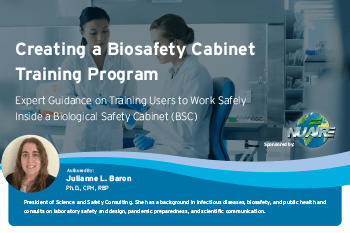

 White Paper
Biosafety Cabinet Waste Management: The Expert Guide Every Lab Professional Needs


Learn proper collection, containment, and disposal procedures for liquid, sharps, and solid biohazardous wastes. Free expert guide by Dr. Julianne L. Baron, Ph.D., CPH, RBP.
Benefit
- Maintain BSC containment barriers and personnel protection
- Prevent product contamination from compromised air curtains
- Ensure compliance with CDC, WHO, and NSF/ANSI standards
- Choose the right containers and positioning for each waste type
- Implement proven decontamination and disposal procedures
The Hidden Risks of Improper BSC Waste Management
Every time you reach outside your biosafety cabinet to discard waste, you're potentially compromising the very protection the cabinet provides. This repeated arm movement disrupts the delicate air curtain, allowing potentially infectious aerosols to escape and unfiltered room air to contaminate your work.
Yet many laboratory professionals aren't aware of proper waste management protocols within biosafety cabinets. The consequences? Increased exposure risk for personnel, product contamination, and potential compliance violations.
This doesn't have to be your reality.
A Systematic Approach to BSC Waste Safety
Our comprehensive guide walks you through every aspect of biosafety cabinet waste management, from pre-work planning to final disposal. Written by Dr. Julianne L. Baron—an expert in infectious diseases, biosafety, and public health—this resource translates complex guidelines from CDC, WHO, and NSF/ANSI into actionable procedures you can implement immediately.
Whether you're working with liquid biohazardous waste, handling sharps, or managing non-sharps solid waste, you'll learn exactly how to collect, contain, and dispose of materials safely while maintaining your BSC's critical protection.
What You'll Learn in This Expert Guide
Categories and Containment of Biohazardous Wastes
Understand the three classifications of waste generated in BSCs and why containing them inside the cabinet during work is essential for safety and product protection. Learn more about optimizing your biosafety cabinet workflow.
Liquid Biohazardous Waste Collection
Learn proper container selection, disinfectant use, aspiration bottle setup, and HEPA filter requirements for liquid waste management.
Sharps Waste Best Practices
Discover container specifications, size selection considerations, and placement strategies that maintain BSC airflow while ensuring puncture-proof collection.
Non-Sharps Solid Waste Management
Master the use of trays, bags, and other containers, including when to use chemical disinfectants and how to avoid airflow disruption.
Safe Removal Procedures
Follow step-by-step protocols for closing, decontaminating, and removing waste containers from the BSC without compromising safety.
Decontamination and Disposal Options
Compare autoclaving, chemical disinfection, and incineration methods. Understand when each is appropriate and what regulations apply to your facility. For complex decontamination scenarios, review our guide on gas decontamination in biosafety cabinets.
Pre-Work Planning Checklist
Anticipate your waste management needs before beginning work to ensure you have appropriate containers positioned correctly. Incorporate these procedures into your facility's standard operating procedures for BSC use.
Based on the Most Authoritative Sources in Laboratory Safety
This guide synthesizes best practices from the leading authorities in biosafety:
- CDC/NIH - Biosafety in Microbiological and Biomedical Laboratories (BMBL) 6th Edition
- WHO - Biological Safety Cabinets and Other Primary Containment Devices
- WHO - Decontamination and Waste Management Monograph
- NSF/ANSI - 49-2022 Biosafety Cabinetry Standards
All procedures and recommendations align with current federal guidelines and international best practices, ensuring your laboratory maintains the highest safety standards and proper biosafety cabinet certification.

FAQ Biosafety Cabinet Waste Management
Why can't I just keep my waste container outside the biosafety cabinet?
Repeatedly moving your arms in and out of the cabinet to discard waste disrupts the air curtain that protects you from potentially infectious aerosols. This movement can allow contaminated air to escape the cabinet and unfiltered room air to enter, compromising both personnel safety and product sterility. Keep all waste containers inside the BSC during work to maintain the containment barrier.
What types of biohazardous waste are generated in a biosafety cabinet?
Three main types: (1) Liquid biohazardous waste, (2) Sharps waste (needles, glass, scalpels), and (3) Non-sharps solid waste (contaminated pipettes, tubes, gloves). Each requires specific containment strategies to ensure safe handling and disposal.
How should I position waste containers inside my BSC?
Follow the "clean to dirty" workflow principle. Position waste containers on the designated "dirty" side of the BSC work zone, typically to the right side if you're right-handed. Keep clean materials and supplies on the opposite side to prevent cross-contamination.
Can large waste containers affect my biosafety cabinet's performance?
Yes. Large sharps containers and tall vertical waste containers can disrupt the critical downward airflow over the work surface. Choose the smallest appropriate containers and use horizontal pipette trays instead of vertical ones to maintain proper airflow patterns.
What should I do with liquid biohazardous waste?
Collect it in leak-proof, closable containers containing the appropriate disinfectant at the correct concentration. If using aspiration bottles or suction flasks, connect them to an overflow flask with disinfectant and an in-line HEPA filter to prevent aerosol release.
How do I know which disinfectant to use for my biohazardous waste?
The appropriate disinfectant depends on the biological agent you're working with. Consult your institution's biosafety officer or safety manual, and refer to CDC/NIH BMBL guidelines. Ensure the disinfectant achieves the necessary concentration after mixing with your waste volume and maintains contact time as specified.
When should I close my waste containers during work?
Close waste containers between additions when using liquid disinfectant to prevent evaporation and maintain effectiveness. All waste containers must be closed before removal from the BSC to prevent spills and aerosol release during transport.
How do I safely remove waste from the biosafety cabinet?
First, close all containers with their appropriate lids. Then, surface decontaminate the exterior of each container using an appropriate disinfectant. If using a secondary container, decontaminate it as well. Only then remove the waste from the cabinet for further processing or disposal.
Can I autoclave all biohazardous waste?
Not all biohazardous waste can be safely autoclaved. Some chemicals present in liquid waste create hazards when autoclaved. Mixed waste (biological + chemical) may require special handling. Always verify with your safety office before autoclaving any waste.
What's the most effective method for decontaminating solid biohazardous waste?
Autoclaving is the most effective and reliable method for decontaminating laboratory materials and solid biohazardous waste. Chemical disinfection is not recommended for solid waste because ensuring contact with all surfaces for the required time is difficult to impossible.
Do I need to plan my waste management before I start working?
Absolutely. Review your technical procedures beforehand to anticipate what types and volumes of waste you'll generate. Place all necessary waste containers inside the BSC before beginning work. This prevents workflow disruptions and maintains the BSC's containment barrier.
What regulations apply to biohazardous waste disposal?
Multiple levels: federal (OSHA, EPA), state, local, and institutional policies. Regulations vary by location and waste type. Always consult your safety office or safety subject matter expert before implementing any decontamination or disposal procedure. Compliance requirements may differ significantly between facilities.
Can I dispose of decontaminated biohazardous waste in regular trash?
It depends on your organization's policies, local regulations, and the specific decontamination method used. After proper autoclaving, some facilities allow disposal in regular waste streams, but this varies widely. Always verify with your safety office before disposing of any decontaminated waste.
How often should I empty waste containers from my BSC?
Empty containers before they reach maximum capacity (typically when 75% full for sharps containers). Never overfill containers, as this increases exposure risk during removal and transport. Establish a regular schedule based on your work volume.
Where can I find more information about biosafety cabinet best practices?
Key authoritative sources include: CDC/NIH Biosafety in Microbiological and Biomedical Laboratories (BMBL) 6th Edition, WHO Biological Safety Cabinet monographs, and NSF/ANSI 49-2024 standards. Download our comprehensive guide for detailed procedures and references.
Related Resources
Biosafety Cabinet Introduction Webinar

HEPA versus ULPA Filters in Biosafety Cabinets

Leverage USP Training to Drive Technician Retention

PEC and C-PEC Installation Process


LabGard NU-581 (115V) Class II Biosafety Cabinet Specification

Aeromax Biosafety Cabinet Control System Introduction
Setting the Blower Password on the Aeromax Control System
Setting the Light Timer on the Aeromax Control System

Reacting to Alarms in Your Class II, Type A2 Biosafety Cabinet
Biosafety Cabinet Construction Matters
Buying a Biosafety Cabinet Making an Informed Decision