The Impact of Externally Exhausted Biosafety Cabinets on Airflow Dynamics

Externally exhausted biosafety cabinets, including Class II, Type B2 cabinets with 100% exhaust, impose continuous HVAC loads of roughly 1,200–2,000 CMH, driving significant energy cost and carbon footprint. HEPA filtration alone provides verified biological containment per NSF/ANSI 49; external ducting is required only when volatile chemicals, gases, or radionuclides are present.
Why Airflow Design Decisions Shape Biosafety Cabinet Selection
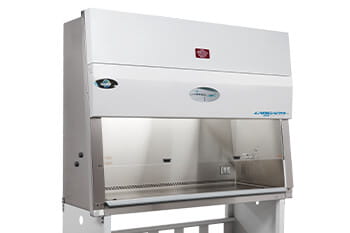
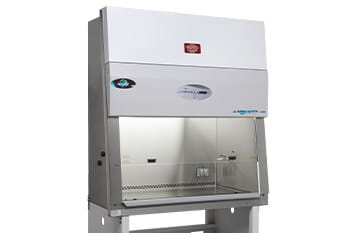
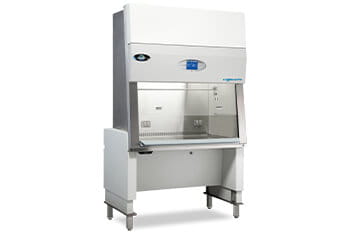
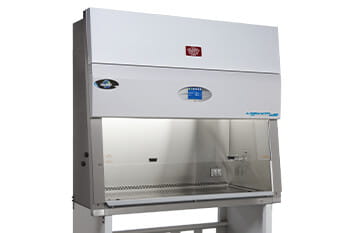
Airflow management is the foundation of laboratory and pharmacy facility design. Exhausting more air than a room receives creates negative pressure that, combined with low-leakage walls and ceilings, establishes a controlled containment environment. Primary containment equipment — including NuAire Class II Biosafety Cabinets, Containment Ventilated Enclosures, and laboratory fume hoods — delivers direct protection to personnel and the environment. Externally exhausted biosafety cabinets are one such example, where careful planning of airflow dynamics determines whether both the cabinet and the facility function safely.
More exhaust does not automatically make a facility safer. Effective protection depends on deploying the right equipment for the hazard, optimizing room and equipment layout, and ensuring airflow strategies support the containment objectives defined in the Biosafety in Microbiological and Biomedical Laboratories (BMBL), 6th Edition, published by the CDC and NIH. Every piece of installed airflow equipment carries both capital expenditure (CapEx) and operational expenditure (OpEx) implications: energy use, maintenance, and the consequences of removal or redesign make it critical to get the airflow design right the first time.
The Energy and Carbon Cost of Total Exhaust
Class II, Type B2 Cabinets Behave Like Fume Hoods
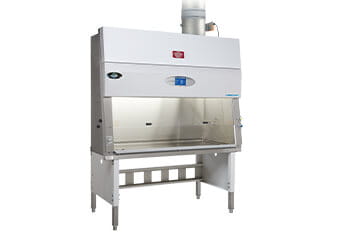
From an airflow and energy standpoint, a NuAire Class II, Type B2 Biosafety Cabinet behaves much more like a chemical fume hood than a recirculating biosafety cabinet. A typical 4-foot Type B2 cabinet exhausts approximately 1,200–2,000 CMH (cubic meters per hour) of air continuously with no recirculation, requiring an equal volume of outdoor air to be supplied, conditioned, and exhausted again. In effect, the cabinet operates as a permanent, dedicated outdoor-air system embedded within the laboratory. See How a Class II, Type B2 Biosafety Cabinet Works for a full airflow breakdown.
Comparing Exhaust Loads Across Cabinet Classes
Actual airflow and exhaust volumes are model- and application-specific and must be confirmed against manufacturer Purchase Specifications and field certification data.
| BSC Type | Airflow Description | What the Building Must Provide | Order-of-Magnitude External Exhaust |
|---|---|---|---|
| Class II, Type A2 | ~70% recirculated / ~30% exhausted | Low external exhaust (canopy/thimble, or none if room-recirculating) | ~400–1,400 CMH |
| Class II, Type B1 | Often ~70% exhausted / ~30% recirculated; building exhaust volume is model- and application-specific | Typically closer to A2-scale than B2-scale (project-dependent) | ~500–800 CMH |
| Class II, Type B2 | 100% exhaust | High external exhaust (hard-ducted, dedicated fan) | ~1,200–2,000 CMH |
Note: The percentage split is a widely accepted standardized ratio; actual flow (CMH) depends on model size and manufacturer data.
Annual Energy, Cost, and Carbon Impact
When operated continuously (24 hours a day, 365 days a year), a single 4-foot Type B2 cabinet exhausting approximately 1,250 CMH can drive 18,000–30,000 kWh per year of HVAC energy consumption in temperate climates, and 100,000–150,000 kWh per year in warm, humid climates where dehumidification (latent load) dominates, per ASHRAE Fundamentals methodology.
Using electricity grid emission factors of 0.38–0.45 kg CO₂ per kWh published by the U.S. EPA and the International Energy Agency, a continuously operated 4-foot Type B2 cabinet may be responsible for approximately 8–15 metric tons of CO₂ per year in temperate climates and 40–60 metric tons of CO₂ per year in humid tropical climates, comparable to two to three passenger vehicles driven continuously, or ten or more in humid climates. At U.S. commercial electricity rates of USD 0.12–0.18 per kWh (EIA) versus Singapore rates of USD 0.22–0.30 per kWh (EMA, SP Group), identical cabinet configurations can carry markedly different annual operating costs depending on location.
Perceived Safety Is Not Safety
For biological hazards, the fundamental biosafety objective is to contain contamination at the point of generation, not to rely on dilution or removal after release. The BMBL identifies Class II biosafety cabinets (Types A2, B1, and B2) as appropriate primary containment devices for BSL-1, BSL-2, and BSL-3 biological work, stating that personnel and environmental protection is achieved through controlled airflow and verified HEPA filtration, not the destination of exhaust air. HEPA filters are highly efficient for biological aerosols; they do not remove gases or vapors, which require exhaust or other treatment methods.
Modern Class II cabinets, including the NuAire Class II, Type A2 Biosafety Cabinet, maintain potentially contaminated plenums under negative pressure relative to the room, and HEPA filter integrity is verified, not assumed, through routine aerosol challenge and scan testing during field certification. See Biosafety Cabinet Field Certification: What Lab Professionals Need to Know for certification protocols. A cabinet with a compromised HEPA filter is unsafe regardless of whether it exhausts to the room or to the outdoors: safety comes from verified containment, not from exhaust destination.
When Is a Ducted Biosafety Cabinet Necessary?
Hazards That Require External Exhaust
Ducted configurations become necessary only when hazards exist that HEPA filtration cannot control:
- Volatile toxic chemicals, such as formaldehyde or organic solvents
- Hazardous drug preparation involving volatile components
- Radioiodine or other volatile radionuclides
- Strong odors that are unacceptable in the laboratory environment
- Processes generating mixed biological and chemical hazards
NuAire’s Sterile Hazardous Drug Compounding and Non-Sterile Hazardous Drug Compounding industry pages outline containment requirements for these applications in more detail.
Lower-Energy Alternatives to Defaulting to a Type B2
Even when ducting is required, a Type B2 cabinet is not always the most energy-responsible solution. A NuAire Class II, Type A2 cabinet with a canopy (thimble) connection can address odor control or trace vapor removal while preserving the cabinet’s recirculating airflow balance. A NuAire Class II, Type B1 Biosafety Cabinet is commonly applied in hazardous drug preparation, where some chemical exhaust is required but total exhaust is not, and its building exhaust demand is frequently closer to A2-scale than B2-scale. Specialized cytotoxic cabinets and custom-engineered bag-in/bag-out (BIBO) systems address risk at the source for potent drugs and radioactive particulates, respectively. Review Biosafety Cabinet Types: Class I, II & III BSC Guide for a full classification overview, or Choosing a Biosafety Cabinet Through Risk Assessment to match cabinet class to hazard.
Planning Airflow Integration With Facility HVAC
The correct planning question is not “how much air can we exhaust,” but “what hazard is being generated, as identified through a risk assessment, and how do we control it at the source?” That determination should be made by a qualified scientific safety officer in collaboration with biosafety, industrial hygiene, and engineering teams. Once the hazard is defined, the design engineer’s role is to quantify airflow and energy impacts, advise on lower-energy configurations where feasible, and evaluate energy recovery or optimization strategies that do not compromise safety.
For existing facilities, introducing any new ducted equipment should trigger a review of room pressurization, adjacent space relationships, and overall airflow balance: in many cases, rebalancing is required to maintain containment as originally designed. Externally exhausted biosafety cabinets play a critical role in protecting personnel, products, and the environment, but they are not standalone devices: their exhaust requirements directly influence facility airflow dynamics, pressurization strategy, HVAC capacity, and long-term operating cost. Successful integration depends on early planning, accurate data, and close collaboration between facility stakeholders, engineers, and manufacturers.
About the Author: Dan Yoong is a biocontainment engineer with over 20 years of experience in the design and commissioning of BSL-2, BSL-3, and BSL-4 laboratories. This white paper was developed in collaboration with World BioHazTec, a global leader in BSL-2, BSL-3, and BSL-4 laboratory consulting.
Frequently Asked Questions
Does exhausting a biosafety cabinet outdoors make it safer for biological work?
No. NSF/ANSI 49-certified Class II biosafety cabinets achieve biological containment through controlled airflow and verified HEPA filtration, not through the destination of exhaust air. The BMBL identifies Class II, Type A2, B1, and B2 cabinets as equally appropriate primary containment for BSL-1 through BSL-3 biological work when properly installed, maintained, and certified.
When does a biosafety cabinet need to be ducted to the building exhaust system?
Ducting is required only when a risk assessment identifies hazards that HEPA filtration cannot control: volatile toxic chemicals, hazardous drug preparation involving volatile components, radioiodine or other volatile radionuclides, or processes generating mixed biological and chemical hazards. HEPA filters capture particulates, including biological aerosols, but do not remove gases or vapors.
How much energy does a Class II, Type B2 biosafety cabinet use annually?
A continuously operated 4-foot Class II, Type B2 cabinet exhausting approximately 1,250 CMH can consume 18,000–30,000 kWh per year of HVAC energy in temperate climates, rising to 100,000–150,000 kWh per year in humid climates where dehumidification load is significant, per ASHRAE Fundamentals methodology.
What is the difference between a Class II, Type A2, B1, and B2 biosafety cabinet?
Type A2 cabinets recirculate approximately 70% of airflow within the cabinet and exhaust roughly 30%, often through a canopy connection. Type B1 cabinets typically exhaust about 70% and recirculate 30%. Type B2 cabinets exhaust 100% of airflow with no recirculation. Building exhaust demand scales accordingly, from roughly 400–1,400 CMH for A2 to 1,200–2,000 CMH for B2.
What is a lower-energy alternative to a total-exhaust Type B2 cabinet?
A Class II, Type A2 cabinet with a canopy (thimble) connection addresses odor control or trace vapor removal while preserving recirculating airflow, and a Class II, Type B1 cabinet supports hazardous drug preparation with building exhaust demand frequently closer to A2-scale than B2-scale: both reduce the energy and carbon penalty of total exhaust compared to a Type B2 cabinet.
{
“@context”: “https://schema.org”,
“@graph”: [
{
“@type”: “FAQPage”,
“mainEntity”: [
{
“@type”: “Question”,
“name”: “Does exhausting a biosafety cabinet outdoors make it safer for biological work?”,
“acceptedAnswer”: {
“@type”: “Answer”,
“text”: “No. NSF/ANSI 49-certified Class II biosafety cabinets achieve biological containment through controlled airflow and verified HEPA filtration, not through the destination of exhaust air. The BMBL identifies Class II, Type A2, B1, and B2 cabinets as equally appropriate primary containment for BSL-1 through BSL-3 biological work when properly installed, maintained, and certified.”
}
},
{
“@type”: “Question”,
“name”: “When does a biosafety cabinet need to be ducted to the building exhaust system?”,
“acceptedAnswer”: {
“@type”: “Answer”,
“text”: “Ducting is required only when a risk assessment identifies hazards that HEPA filtration cannot control: volatile toxic chemicals, hazardous drug preparation involving volatile components, radioiodine or other volatile radionuclides, or processes generating mixed biological and chemical hazards. HEPA filters capture particulates, including biological aerosols, but do not remove gases or vapors.”
}
},
{
“@type”: “Question”,
“name”: “How much energy does a Class II, Type B2 biosafety cabinet use annually?”,
“acceptedAnswer”: {
“@type”: “Answer”,
“text”: “A continuously operated 4-foot Class II, Type B2 cabinet exhausting approximately 1,250 CMH can consume 18,000–30,000 kWh per year of HVAC energy in temperate climates, rising to 100,000–150,000 kWh per year in humid climates where dehumidification load is significant, per ASHRAE Fundamentals methodology.”
}
},
{
“@type”: “Question”,
“name”: “What is the difference between a Class II, Type A2, B1, and B2 biosafety cabinet?”,
“acceptedAnswer”: {
“@type”: “Answer”,
“text”: “Type A2 cabinets recirculate approximately 70% of airflow within the cabinet and exhaust roughly 30%, often through a canopy connection. Type B1 cabinets typically exhaust about 70% and recirculate 30%. Type B2 cabinets exhaust 100% of airflow with no recirculation. Building exhaust demand scales accordingly, from roughly 400–1,400 CMH for A2 to 1,200–2,000 CMH for B2.”
}
},
{
“@type”: “Question”,
“name”: “What is a lower-energy alternative to a total-exhaust Type B2 cabinet?”,
“acceptedAnswer”: {
“@type”: “Answer”,
“text”: “A Class II, Type A2 cabinet with a canopy (thimble) connection addresses odor control or trace vapor removal while preserving recirculating airflow, and a Class II, Type B1 cabinet supports hazardous drug preparation with building exhaust demand frequently closer to A2-scale than B2-scale: both reduce the energy and carbon penalty of total exhaust compared to a Type B2 cabinet.”
}
}
]
},
{
“@type”: “BreadcrumbList”,
“itemListElement”: [
{ “@type”: “ListItem”, “position”: 1, “name”: “Home”, “item”: “https://www.nuaire.com/” },
{ “@type”: “ListItem”, “position”: 2, “name”: “Resources”, “item”: “https://www.nuaire.com/resources” },
{ “@type”: “ListItem”, “position”: 3, “name”: “The Impact of Externally Exhausted Biosafety Cabinets on Airflow Dynamics”, “item”: “https://www.nuaire.com/resources/externally-exhausted-biosafety-cabinets-airflow-dynamics-white-paper” }
]
},
{
“@type”: “DigitalDocument”,
“name”: “The Impact of Externally Exhausted Biosafety Cabinets on Airflow Dynamics”,
“description”: “Learn how externally exhausted biosafety cabinets affect lab airflow, energy costs, and containment strategy, plus when ducting is truly required.”,
“author”: {
“@type”: “Person”,
“name”: “Dan Yoong”,
“jobTitle”: “Biocontainment Engineer”
},
“contributor”: {
“@type”: “Organization”,
“name”: “World BioHazTec”
},
“publisher”: {
“@type”: “Organization”,
“name”: “NuAire, Inc.”,
“url”: “https://www.nuaire.com/”
},
“datePublished”: “2026-07-06”,
“identifier”: “20-1707”,
“about”: [“Biosafety Cabinet Airflow Design”, “HVAC Energy Cost”, “NSF/ANSI 49 Containment”],
“keywords”: “externally exhausted biosafety cabinet, Class II Type B2, airflow dynamics, HVAC energy cost, biosafety containment”,
“url”: “https://www.nuaire.com/resources/externally-exhausted-biosafety-cabinets-airflow-dynamics-white-paper”
}
]
}
Related Resources


Smoke Tests NSF/ANSI 49

Standard Operating Procedures (SOPs) for Biosafety Cabinet Use

Surface Decontamination in a Biosafety Cabinet
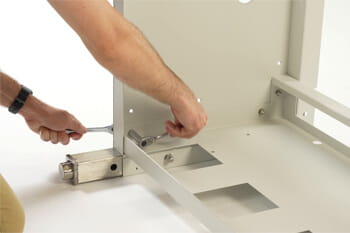

Telescoping Base Stand Assembly
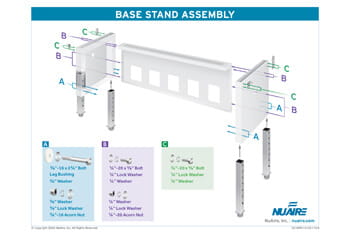
Telescoping Base Stand Assembly Infographic
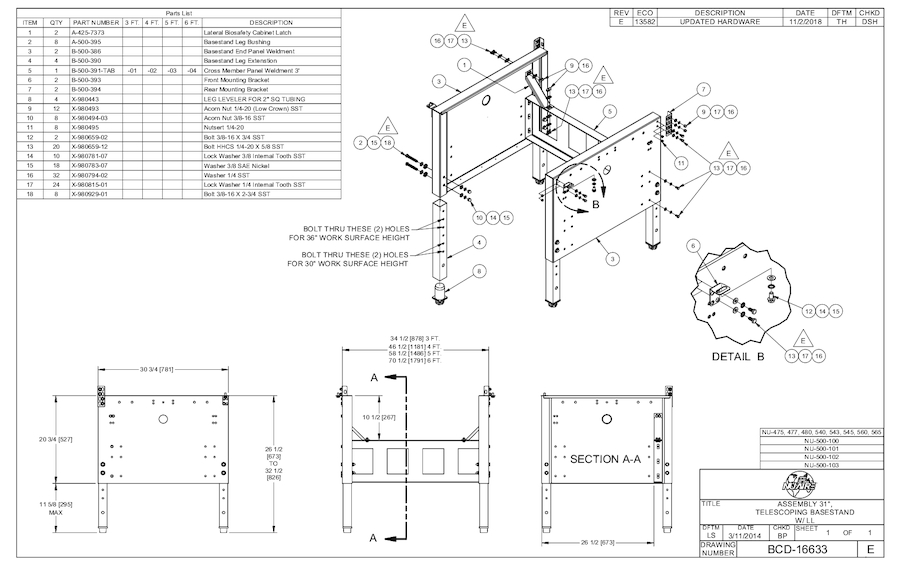
Telescoping Base Stand Assembly with Leg Levelers 31-inch Depth